
The Wessels of Loštice: The Family Behind Olomouc Tvarůžky

 The winding streets of Loštice, a quaint little town in Central Moravia, hold a rich story that is tied to the scent of tvarůžky. This is where Alois Wessels, who continued a family tradition and embodied the entrepreneurial spirit of his era, grew a small workshop into the largest cheesemaking empire of the monarchy. Today, the renowned brand A.W. – Olomoucké tvarůžky honors his legacy. After 150 years, it still celebrates its founder with an updated visual style and the slogan “We’ve been playing together since 1876.”
The legendary tvarůžky, once seen as a food for the less fortunate, have been elevated to a true delicacy, thanks to the Wessels family, making them a treasured part of our cultural heritage. This one and only authentic Czech cheese has endured through monarchies, wars, and various regimes. The journey of Alois Wessels, founder of brand A. W., demonstrates that hard work, courage, and belief in a good idea can create a lasting legend that still resonates today.
From the coach family to the founders of the brand
 The tradition of producing tvarůžky dates back to the late 15th and early 16th centuries, when simple curd cheeses were made. However, in 1876, Josef Wessels, a coachman and cheesemaker, along with his wife, established a small family-run operation. Initially, the process involved small-scale home production, where the cheese was dried and aged on boards in barns and rooms. But production quickly escalated, and the once quiet town transformed into tvarůžkový raj step by step.
His son, Alois Wessels, who had a visionary outlook and entrepreneurial talent, took over and turned the modest family workshop into a modern production facility, outpacing all competitors in Austria-Hungary with his impressive output. Wessels expanded production and distribution, which became synonymous with top-notch quality.
A pioneer with a vision
 Alois Wessels was part of a generation of business leaders who realized that a brand’s strength relies not just on the product, but also on its reputation. He focused on purity, quality ingredients, and consistent taste. While initially only family members made tvarůžky, Alois expanded to hire dozens of workers. By 1912, he employed 36 people, providing jobs and stability for many local families.
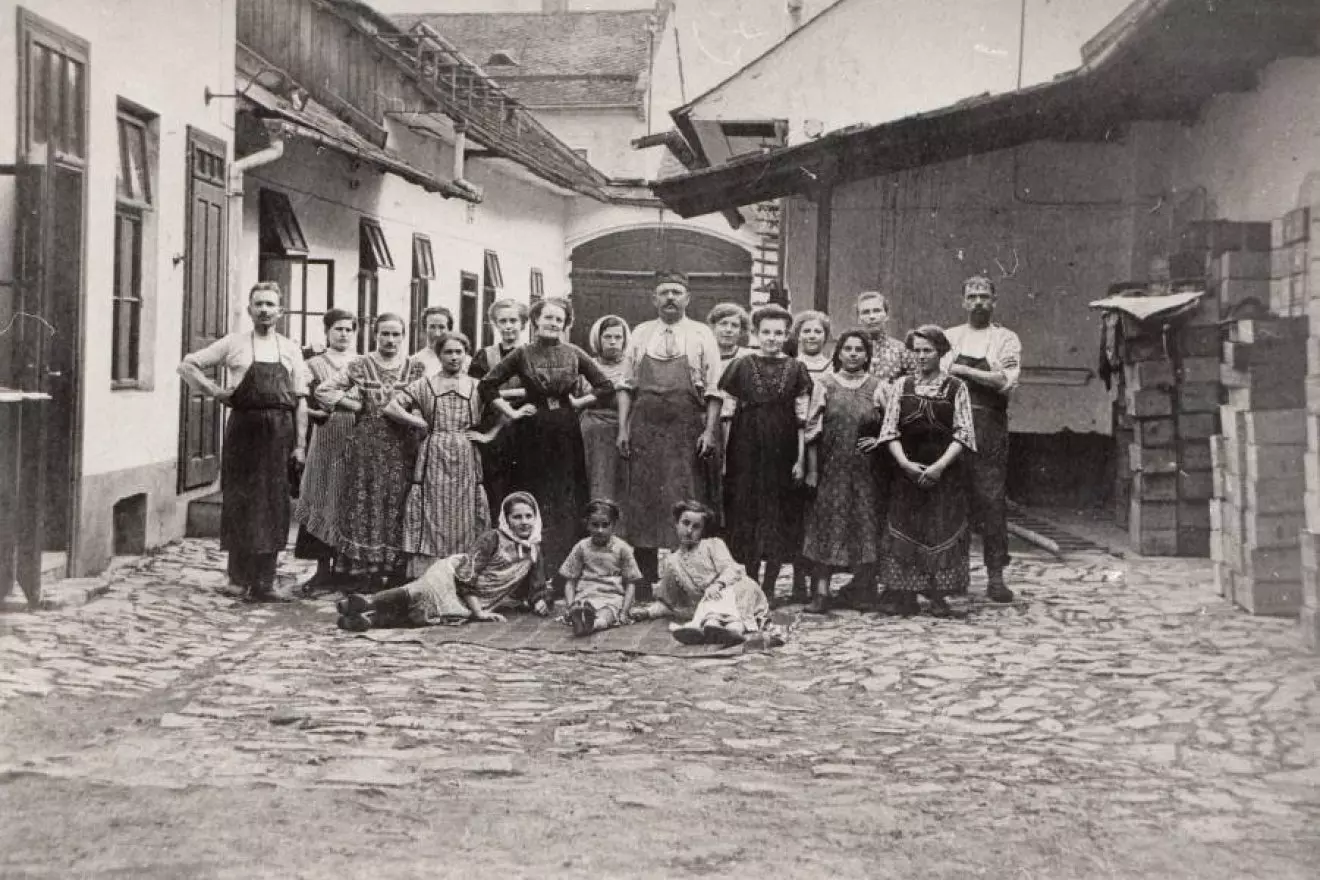
From this era, there exists a well-known historical photo showing Alois Wessels among the employees at house No. 57 in Loštice. This image from 1909 serves as a source of inspiration for the current management of the company. It reflects on the significant journey of the Loštice tvarůžkárna and confirms that the local tvarůžky remains one of the most popular matured cheeses available today.
Alois Wessels: the man who gave tvarůžky its soul and name
 It was just Alois Wessels who turned traditional home craftsmanship into effective modern production, but this shift came at a cost: after taking control of the company, he secured a loan of 1,500 guilders and invested that into increasing production. He purchased a building on the square in Loštice and reformed its back section into a modern facility. He introduced hand clappers, which boosted daily productivity from 4,000 to 9,000 cheeseburgers. Consequently, the company stayed in tune with the soaring demand and supplied markets stretching from Olomouc to Vienna.
His products became a staple of the Austro-Hungarian gourmet scene, with tvarůžky exported to cities all over the monarchy, establishing Loštice as the capital of matured cheese.
A family that thought about the future
 Alois Wessels not only built a successful business but also a resilient family tradition. In 1917, he passed the company to his daughter Frantiska and son-in-law Karel Pivný. He effectively ensured the continuity of production and protected the family during the challenging times of World War I. His other children, Marie and Vincenc, received their own stakes and a new factory, creating a robust family network that survived subsequent nationalization.
Under Karel Pivný, the company underwent significant modernization and transformation in 1930. After World War II, the business was nationalized, but in 1991 it was returned to the original founders’ descendants through restitution. They continue to carry on their ancestors’ legacy to this very day.
In 1997, the company experienced technological updates, and in 2010, Olomoucké tvarůžky received Protected Designation of Origin from the European Commission. Four years later, the Museum of Olomouc tvarůžky was opened – a unique place in the Czech Republic. Visitors can explore the authentic study of Karel Pivný, enjoy retro films about the history of tvarůžky, see a genuine 20th-century molding and bathing machine, and follow a timeline that details the evolution of production.
Traditional delicacy in a modern style
 In 2025, the company introduced a new visual style that is modern, clear, and still honors tradition. Central to this new design is the image of Alois Wessels, accompanied by the motto “We have been playing together since 1876.” This fresh look is aimed at connecting tvarůžky with younger consumers, appealing to the culinary scene, and reminding everyone that even cherished traditional products can evolve.
Today, around 180 people work at the tvarůžkárna, producing 2,200 tons of tvarůžky in over thirty varieties each year and running company stores in Loštice, Olomouc, Brno, and Ostrava.
Healthy delicacy with tradition
Even after one hundred and fifty years, tvarůžky still carries the Alois Wessels hallmark: genuine flavor, distinctive aroma, integrity, and character. Made with low-fat cottage cheese, free from artificial colors, rennets, and stabilizers, they offer nutritious protein with minimal fat – and yet (or perhaps because of it) they are attracting new enthusiasts across generations.
Today, tvarůžky are much more than just cheese. They symbolize Czech identity, represent the Olomouc Region, and tell a tale of courage and family tradition that has transformed Loštice into a cultural and culinary landmark. Whether you enjoy tvarůžky in Loštice, Olomouc, or Prague, each bite carries the essence of a family that believed that even a humble cheese can become a legend.


