
Enchanting Vampire Royalty, Dark Myths, and Breathtaking Destinations

When did the idea of Czech fear of the undead begin? The earliest references to vampires in the Czech lands date back to the Baroque period. Back then, people thought that some deceased individuals could rise from the dead to steal strength, health, or even blood from the living. These beings were referred to as vampires, inhumans, or nosferatu. To prevent the dead from returning, they would place a stone in their mouths and add iron or poppy seeds in their coffins, believing the countless seeds would keep the soul occupied forever. These old beliefs have become part of local culture and continue to inspire many local legends.
Stories about vampires and how to protect yourself from them
 While the story of Dracula is often linked to Romanian Wallachia and the infamous Vlad III. Dracula, similar tales exist within our own folklore. In some regions of southern Bohemia and southern Moravia, it was believed that a vampire could be someone who had died in strange ways or hadn’t been buried properly. Some families were cloaked in stories of mysterious deaths, odd rituals, and eerie behaviors of their members. These narratives often helped to explain bizarre occurrences or disease outbreaks like plagues.
In local stories and legends, there are frequent themes of protection against vampires—for instance, using garlic, holy water, or placing a stone in the deceased’s mouth to ensure they remain in their grave. These customs and practices showcase the deeply rooted fear of vampires in the cultural mindset of the Czech people.
Where to explore the legends of Czech Draculas
 When you travel to Žďár nad Sázavou, be sure to visit the Baroque plague cemetery, designed by Jan Blažej Santini. This is where Johann Alois Ulrich, the administrator of the castle, was supposedly laid to rest. He was known as a proud and cruel figure, said to have returned from the dead. People claimed to have seen him in a fiery chariot pulled by headless horses, causing widespread fear in the city. The situation escalated until the executioner from Jihlava was called to open his grave, behead him, and pour poppy seeds into his mouth so he could finally rest peacefully. According to local superstition, he was believed to remain at peace for as many years as there were seeds in his mouth. This serves as one of the oldest records of the Czech belief in the undead. What do you think—was he a vampire, or just a product of human imagination in Žďár?
The vampire princess from Český Krumlov
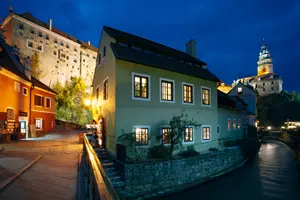
 We are referring to Princess Eleonora Amalia of Schwarzenberg, who resided in Český Krumlov during the late 17th and early 18th centuries. This noblewoman was known for her love of hunting, even bringing a tame wolf—an animal often linked to vampire lore—with her rather than hunting dogs. Her peculiar interests, such as breeding wolves and attempting to conceive using wolf milk, stirred quite a bit of gossip. Townsfolk began to spread rumors about a pact with the devil and labelled her the vampire princess.
Eleonora died shortly after giving birth. Upon discovering a tumor in her body, the emperor’s doctor believed it to be clear signs of a vampire infection. They even performed a surgery to remove the heart from her body as a precaution against her potentially turning into a vampire after death. Strangely, her grave lacks her family coat of arms and name, as the Schwarzenberg clan has distanced itself from her legacy. It is still said that she might have inspired Bram Stoker while writing his novel Dracula.
The Czech Lady of Karlštejn
 Karlštejn Castle, a gem of Charles IV, has its share of grim history. Here lived Kateřina Bechyňová, the wife of the Purgrave of Karlštejn, also known as the Czech Lady of Bohemia. This woman had a sadistic nature, enjoying inflicting torture on her subjects for imagined offenses, leaving many victims severely injured or dead. She largely ruled alone at the fortress in Pičín since her husband was often away due to his duties. Her favorite tortures included slicing her skin and sprinkling salt on the wounds, pouring boiling and then icy water on them, burning skin with hot butter, and even skinning. She didn’t try to conceal her acts, which instigated horror among villagers about who might be next.
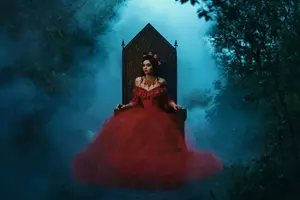 The horrific accounts from her victims about her brutal treatment of servants and mysterious disappearances from the castle were brought to the attention of Dean Václav Hájek from Libočany, who penned a famous chronicle. A domineering and arrogant woman, she sued him for “defamatory and light words” when he critiqued her bizarre behaviors. Many scared witnesses initially reported mysterious deaths from the plague, but over the course of the lengthy trial, individuals eventually found their courage, leading to the truth emerging. One testimony led to another, and ultimately, Kateřina confessed to having tortured and killed at least 14 individuals, primarily young girls. It was said that she even bathed in their blood…to preserve her youth, much like Elizabeth Bathory.
The verdict shocked many: rather than receiving a pardon, Judge Vojtěch of Pernštejn sentenced her to death by starvation in the Mihulka Tower at Prague Castle. She died in March 1533, and according to local lore, she cursed Pernštejn, dragging him to his grave, which happened two days later.
Čelákovice vampires – an archaeological enigma of Central Bohemia
 In 1966, archaeologists uncovered a bizarre burial site in Čelákovice. Some skeletons had their heads cut off, others had hands or feet bound, and one grave even contained a wooden stake. Were these individuals victims of myth, executed criminals, or true “undead”? The answer remains unknown even today. Some believe this site could be Europe’s largest vampire graveyard, while others point to a nearby gallows as a potential final resting place for the executed. What is clear, however, is that the discoveries in Čelákovice rank among the most famous “vampire” finds in Europe. The local museum regularly showcases these findings for visitors.
Vampires in Czech film and culture
 The idea of vampires has become an important part of Czech culture. In the 1980s, the cult film The Vampire of Ferat, a horror film with supernatural themes directed by Juraj Herz, featured a racing car that ran on human blood. Vampires are also prominent in other films: you might recall Dracula directed by Francis Ford Coppola in 1992, with Gary Oldman and Winona Ryder, or the 2024 remake of Nosferatu directed by Robert Eggers, a nod to the original horror classic from 1922.
The latest tale of love and immortality comes from the legendary director Luc Besson. Dracula: A Love Story (2025) is a romantic-horror drama that examines the human aspects and emotional struggles of an immortal being, moving beyond the typical vampire caricature.
Vampires in the modern Czech context
 New interpretations of age-old tales appear in literature, from fantasy series to theatrical adaptations of Dracula. If you explore the event schedules at castles and chateaus, you’ll see that Czech Vampire Nights are very much alive today: night tours, haunted pathways, and themed festivals bring these ancient myths to life every autumn.
Here’s a tip on how to break free from boredom: Follow the vampire trail while holding a lantern—the night tours of castles and chateaus, haunted paths, and themed excursions guide you to places where history and myth intertwine. Popular vampire filming locations and night tours include spots like Lake Bítov, Houska, Křivoklát, and Bouzov.
Dark tales that never fade away
 Although there has never been a true Dracula in Bohemia, stories about vampires are deeply ingrained here. It could just be the flights of fancy of long-gone generations—or perhaps it’s the lingering echoes of an age-old belief in forces that even modern logic can’t fully explain.
One thing is unmistakable: as night falls over the old cemetery, it seems more than just rustling leaves can be heard in the stillness of midnight. In that moment, you’d almost believe that the Czech Dracula never truly went to sleep.


