
Clocks Go Back on the Last Weekend of October 2025: From Summer to Winter Time

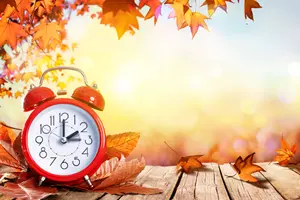 Here we go again. For many people, the welcome change from summer to winter time took place on the night from Saturday 25 October to Sunday 26 October 2025, when the clocks went back one hour, from 3:00 a.m. to 2:00 a.m., so the night was one hour longer. Many people find summer time unpleasant, and biologists see it as an unnatural interference with human biological rhythms, to which some people react more sensitively and find harder to adjust. And while in March the clocks change to summer time, in October we should properly say that “standard” time returns: summer time is the only one that deserves a seasonal label.
A curious thing happens if you are travelling during the autumn change: long-distance trains and buses running at the time of the change usually stop at a station and wait for an hour, so that they do not arrive at their next stop an hour early. So why do we have two different times, and why do we switch from “true” astronomical time to “artificial” summer time?
 The roots of the practice go back to the First World War. In 1916, several European countries introduced summer time to save fuel during the war. Sweden was the first to try the idea, testing it from April to September, but did not continue with it afterwards. Other countries found it useful, however, for instance Germany and Austria-Hungary, which included the Czech lands. Great Britain, France, Spain and Russia followed in 1917. The clocks were also changed overseas, particularly in the USA. After the war, summer time was abolished and was only reintroduced during the Second World War. At first, from 1940 to 1942, it applied all year round. Then, in 1943 and 1944, an additional hour of summer time was added, putting the clocks two hours ahead. Instead of 4 p.m., it was 2 p.m., and dusk was already falling…
 Compared with other countries, our country also tried another extreme. In 1946, an experiment with “winter time” was carried out. This was not the true, natural time, but time artificially shifted forward by one hour. That year, the difference between summer time and winter time was two hours… The experiment was not a success and was not repeated in the following years. Summer time was abolished in 1949 and has been used in its current form since 1979, following the oil crisis. Since 1996, the country has followed the European Union and moved the end of summer time to the end of October instead of September.
Why do we still have two times?
 Summer time is criticised by many experts, as the energy savings it was meant to bring appear doubtful. Findings by the Prague electricity company Pražská energetika suggest that savings occur mainly around the equinox, and even then they amount to only about one percent. In the other months, there are practically no savings at all. Doctors and psychologists agree that it takes people a long time to get used to getting up an hour earlier, which leads to lower concentration and productivity. Statistics also show a rise in traffic accidents in the days after the switch to summer time.
The European Union supports abolishing the time change, but the individual member states have not yet agreed on which time to keep. So far, there is agreement only that a single time should apply across Europe, but putting it into practice has stalled. According to a survey, most Europeans, around 56%, would prefer to stay on summer time permanently, which means keeping their clocks one hour ahead for good. On the other hand, 36% of Europeans want to keep standard time, while 8% have no firm opinion. Support for permanent summer time is highest in Portugal (79%), Cyprus (73%) and Poland (72%). In contrast, the wish to keep the current standard time is strongest in Finland (48%), Denmark (46%) and the Czech Republic (45%).
When do the clocks change each year?
-
- Summer time usually starts on the last Sunday in March, when the clocks go forward by one hour (from 2:00 to 3:00).
-
- Standard time usually returns on the last Sunday in October, when the clocks go back by one hour (from 3:00 to 2:00).
Tips for coping better with the time change: ideas for outings
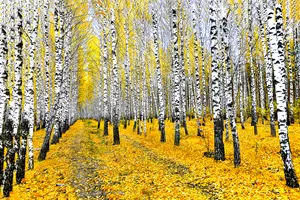 How can you make the most of the extra hour on Sunday? If you feel tired, take the opportunity to rest. Sunny days are good for gardening or a longer trip into the countryside. Take a pleasant walk through an autumn forest before the first snow falls. Near Prague, you can follow the trail of Mikeš the Cat from Hrusice to Říčany, walk through the beautifully coloured Voděradské bučiny beech forests, or explore the equally beautiful Wolf Gorge (Vlčí rokle) near Kamenný Přívoz. The Podkovák peat bog in the Český les hills is slowly settling down for winter, or you can wander through the Brdy forests or Czech Canada.
 In keeping with the theme, you can also take a walk to some interesting clocks. Central Europe’s largest sundial is in Třešť. The village of Rouské in the Přerov region has only 250 residents but as many as eight sundials. Near Cvikov, beyond the Drnovec quarter, there is a protected natural feature called Dutý kámen (Hollow Stone), a group of sandstone rocks in a pine forest. One of the rocks is hollow inside, the result of what experts call columnar weathering of sandstone. One of the rocks still bears a sundial, with its face and the pointer that casts the shadow preserved. Another unusual timepiece is the floral clock planted every year by the colonnade in Poděbrady.


