
Czech Butchery Traditions: Butcher’s Shops, Museums and Meat Specialities
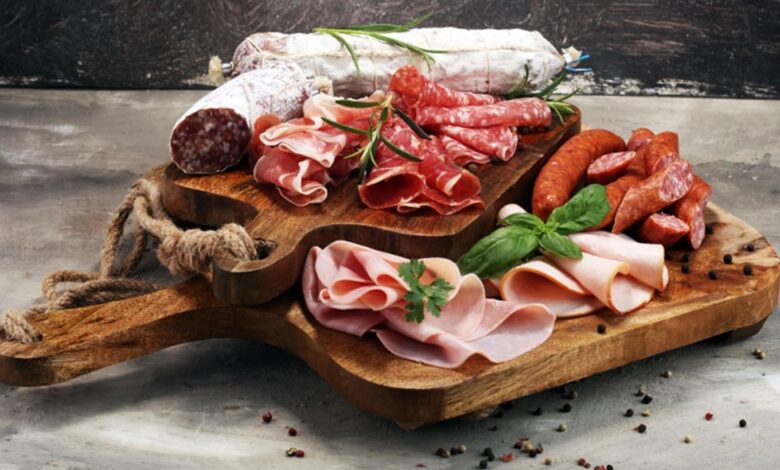
 Salami, sausages, pâtés and pork belly roulade… Just reading the words makes your mouth water. Meat and smoked meats belong on the Czech table as firmly as bread and beer. The Czech tourism portal Kudy z nudy has put together a journey into Czech butchery traditions that smells of smoke and history. You will meet well-known butchers and their products, and also discover museums where you can touch old tools or find out why butchers once held such a privileged position. You might even find out where to taste original Czech pršut (prosciutto) or Prague ham, or where to go for traditional smoked-meat festivals. There is something for everyone in Kudy z nudy’s calendar of the year’s best culinary experiences.
Traditional Czech Slaughter
 Home pig slaughters (zabijačka) have a special place in Czech meat traditions: winter festivities at which families and neighbours came together to process the meat of home-reared pigs “from snout to tail”, without waste and with respect for the craft.
These gatherings gave rise to the most typical delicacies of the Czech countryside, such as jitrnice, jelita, tlačenka, škvarky (cracklings) and black soup. A zabijačka was not just work; it was a social event. It brought people together, passed on the skills of the craft, and is still a reminder of how deeply rooted the honest work of butchers and smokers is in the Czech lands.
Where to Go for Meat
Every region of the Czech Republic has its own unique character, shaped by natural resources, culture and centuries-old traditions. You can see this in local products, which carry the work of local craftspeople and farmers. Whenever you fancy a proper piece of meat, whether a quality steak, a golden fried schnitzel or a juicy chop, head to the well-known butcher’s shops and restaurants. There you can either buy honest ingredients from Czech farms or enjoy a well-prepared meat dish. Kudy z nudy has even found a unique meat vending machine: a family farm in Prosečné near Vrchlabí came up with the idea, and the machine runs non-stop, seven days a week. A second machine, selling aged beef, is in Vrchlabí.
 For tips on good butcher’s shops, try the Bufáček butcher’s buffet in Prague-Karlín, Pražské řeznictví (Prague Butcher’s), with meat from the Polabí region and the Orlické Mountains, Absolon butcher’s in Braník, or the Naše maso butcher’s and bistro in Prague, whose quality is backed by the chefs of the Ambiente restaurants. In South Moravia, Hadač Zapletal is a popular butcher’s and smokehouse; in the Moravian-Silesian Region there is Řeznictví u Bobra in Raškovice; and in the Vysočina region you will find the Mitrovský dvůr shop and steak restaurant and the Ráček family butcher’s and smokehouse in Třebíč, which has repeatedly won the title of King of Smokehouses at the Moravian Smoked Meat Festival at Veveří Castle.
In South Bohemia, visit the Antoni butcher’s and smokehouse, which uses old Šumava recipes from the 18th and 19th centuries. Its Krumlov bacon (krumlovský špek) sprinkled with crushed juniper and its fermented coiled sausage are in particular demand. The company also has two mobile shops, which you can find in the Šumava foothills and the Novohradsko area.
Taliáni, Pršut and the Salámista: Do You Know the Stars of Czech Smoked-Meat Specialities?
 Do you know taliáni (literally “Italians”), a delicacy born in the 19th century in the Prague butcher’s shop of Emanuel Uggé? Taliáni even made it onto the cinema screen: in the film Adéla ještě nevečeřela (Dinner for Adele), the actor Rudolf Hrušínský enjoys them. You might also like the traditional Prague ham.
The tastes and ideas of Czech producers go much further, though. Have you come to love pršut, or prosciutto, a dry-cured ham made mainly in Italy, Spain and Germany? The Italian word prosciutto comes from the Latin perexsuctum, meaning “thoroughly dried”. The first Czech producer of pršut is the family farm and smokehouse Pršutérie Chovaneček in the České středohoří hills. It makes pršut from pork tenderloin, leg of lamb, duck or goose breast, wild boar or beef, and you can visit its shop in Litoměřice.
It is also interesting to follow the best Czech chefs and master butchers, such as Miroslav Panuška. He comes from Hradešice near Horažďovice, where his family has run a butcher’s shop since the 18th century and, among other things, was the first in the Czech lands to make uherák salami. Míra carries on the family butchery tradition while representing the modern face of the craft. Under the Salámista brand, he works on education, original presentation and promotion of meat from quality Czech rural produce. In 2025 he represented the Czech Republic at the prestigious World Butcher Wars competition in Ascot, England. You are likely to meet him at one of the food events where he introduces modern butchery to the public and tries to inspire a new generation of butchers.
Butcher’s Museums: Where Smoked Meat Scents the Air and History Comes Alive
The special position of butchery in Wallachia and its long-tested traditions are documented by the Museum of Butchery in Valašské Meziříčí. This unique experience museum was founded by Karel Pilčík, the current owner of the company MP Krásno. Here you can taste smoked-meat specialities from Krásno and the H+H butcher’s, as well as a special beer, Řeznický lev (Butcher’s Lion), brewed just for the museum by the Paličák microbrewery in Palačov.
At the chateau in Hustopeče nad Bečvou, visit the Butcher’s Museum, which recalls the tradition and development of the local family firm Váhala a spol., founded in 1933. It displays objects and machines the company used until it was nationalised in 1950, along with other furnishings.
A broader view of the history of sausage and meat production is offered by the Jan Pavlíček Butchery Museum in Náměšť nad Oslavou in the Vysočina region, which is unique not only for its theme but also for the size of its collection. Visitors can see small tools as well as large cast-iron machines driven by belt transmission. A real rarity is the kosher butcher’s shop in the Jewish Quarter of Třebíč, in the Seligmann Bauer House.
As Times Changed, So Did the Butchers: The Story of Meat and the Guilds
 Doctors and nutritionists can warn us all they like, but the truth is that we simply love meat and sausages. This is nothing new: butchery existed as an independent craft as early as ancient Greece and Rome. At first the trade also included slaughterhouse workers and cooks, but soon independent butchers’ brotherhoods and later guilds were formed, inspired by the butchers’ organisations of ancient Rome.
It may surprise you that in the Middle Ages butchery was one of the most respected trades. In festive processions, butchers and smokers walked right behind the town council, ahead of goldsmiths, armourers and other trades. Butchers were held in high esteem mainly because they fed whole towns and could win over councillors with quality “under-the-counter goods”. Their role was also practical: they supplied raw materials to other trades, such as shoemakers, tanners, soap-makers and tallow chandlers, who made soap and candles from mutton or beef tallow.
 Butchers also earned a good name for their courage: in 1310, led by the guildmaster Vodička, they defeated Carinthian soldiers at a Prague gate, for which Vodička was given the title of Mayor of Prague. The butchers’ guild then received its own coat of arms from King John of Luxembourg, a silver lion on a red field. In the 14th century there were more than 100 butchers in Prague, and the local butchers’ guild was the very first of all, founded in 1312. Over time, butchers began to specialise: there were sádelníci and drštkáři, who only processed and sold offal, jitrnice, jelita and sausages, as well as smokers.
Butcher’s Emblem at the Brno Reduta
Butchers were ready for a fight: the butchers’ emblem shows a two-tailed lion with a crown on its head, gripping a butcher’s axe. Some butchers’ emblems featured two crossed axes. The festive processions of butchers carrying axes may have inspired the ceremonial sword dances, which were inscribed in 2023 on the List of Intangible Elements of Traditional Folk Culture of the Czech Republic.
You can see the butchers’ emblem on the façade of the Reduta on Zelný trh (the Cabbage Market) in Brno. Although there was never a butcher’s shop in the Reduta, meat was sold at Zelný trh centuries ago. The meat stalls were concentrated in what is now Květinářská Street, and the area was even enclosed by walls with gates. When the meat stalls were abolished at the end of the 19th century, the walls, the gates and the emblem with the lion and axe disappeared. Only the square relief on the Reduta façade remains as a reminder.
Butchers and Meat Halls
 Larger towns had masné krámy (meat halls), ranging from simple stalls to entire buildings. One example is in Pilsen, where the meat halls built in 1392 are now used by the West Bohemian Gallery. The meat halls in České Budějovice are recorded as early as the 16th century; today they house a restaurant that prides itself on traditional Bohemian recipes and Budweiser Budvar beer.
Less well known, but just as interesting, are the meat halls in Moravské Budějovice. The original stalls stood on Míru Square, but in 1839 meat sales moved to a new building, which now houses the Exhibition of Crafts and Trades of South-West Moravia. Here visitors can look into not only a butcher’s shop but also a bakery, a watchmaker’s, a hatter’s and a shoemaker’s workshop.
Comenius, Orbis Pictus and the Butchers
Did you know that butchers and their work were described by Jan Amos Comenius? In his unique book Orbis Pictus, an illustrative engraving shows butchers at work, from slaughtering cattle and skinning to making brawn, jelita and sausages. The description of the picture below comes from specialists at the National Museum of Agriculture in Prague:
 The butcher (1) slaughters cattle (2); lean cattle (3) are not yet fit to eat. The butcher fells the animal with a club (4) or cuts its throat with a butcher’s knife (5), skins it (6), cuts up the meat and offers it for sale in a shop (7). He singes the pig (8) over a fire or scalds it with boiling water (9) and prepares shoulders (10), hams (11) and sides of bacon (12), as well as all kinds of stuffed products: brawn (13), jelita (14), jitrnice (15) and sausages (16). Lard (17) and tallow (18) are rendered.
 Butchers were not only the makers of fragrant delicacies but also stood at the origin of whole traditions, stories and cultural symbols. The Czech butcher’s craft certainly has nothing to be ashamed of: it even appears on the Golden Gate of St. Vitus Cathedral at Prague Castle. Can you find the pig-slaughter motif on it?


