
7 Surprising Facts About Czech Travelers That Will Spark Your Wanderlust!

Where can you learn about Czech travellers? For example, in the series Czechia Between the Lines, we showcase travel books, diaries, and accounts from well-known Czech explorers. You can also find stories of adventurers on their global journeys. But do you know when the first circumnavigation of the world occurred by individuals from the Czech lands? What was the duration of a trip to Iceland in the 17th century, and why did a knight from Central Bohemia have an Eskimo kayak on his family crest? Discover the fascinating and often unusual accomplishments of Czech explorers!
1. Knight in a kayak
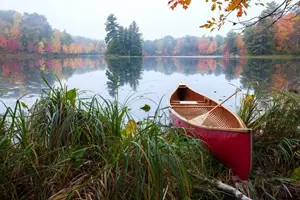 The Czech Republic has an incredible number of paddlers! Among all the paddling adventures on local rivers, knight Jan Zachař of Pašiněves, who journeyed to Scandinavia in the late 15th and early 16th centuries, would have certainly loved his adventures captured by Kudy z nudy. He returned with an intriguing keepsake from Lapland: an Eskimo kayak, which he used for fishing and river excursions. This unique hobby made its mark on his family coat of arms, showing Knight Zachar with a paddle in his hand and wearing armor. You can still view the coat of arms of the lords of Pashinéves on the church in the village Páleč and on the knight’s tombstone located in Vinare. His tale is detailed in the book The Knight in a Kayak, published by Albatros.
2. Journey to Iceland and the Iceland File
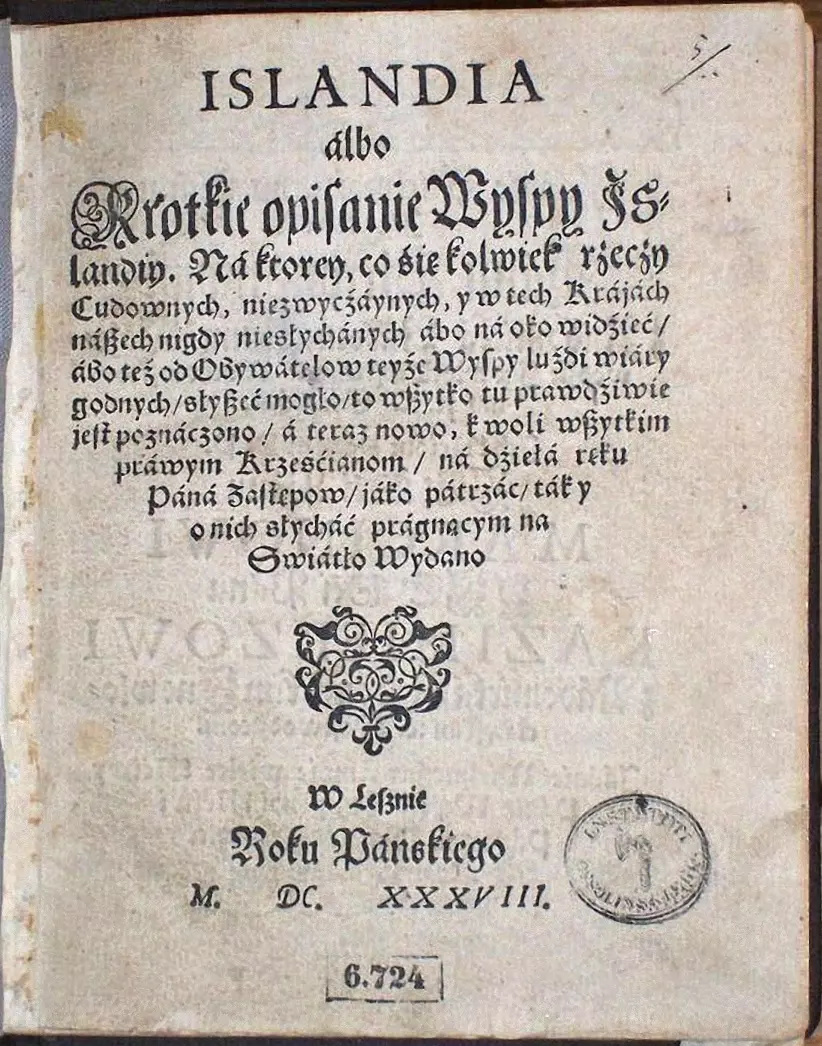 Daniel Strejc – Vetter (1592-1669) was a Czech Brethren printer and pastor who was friends with Jan Amos Komenský. He was the fifth son of Jiří Strejc, the administrator of the Hranice Brethren congregation and creator of psalm translations for the Royal Bible. After his education in the German city of Herbron, Daniel, along with his peer Jan Salmon z Podhoří u Hranic, published an account of an adventurous trip to Iceland in 1613. Following a month-long voyage, they arrived on the western coast, explored nearly the entire island during their stay, attended the Althing, which is Europe’s oldest parliament, and visited the bishop’s seat at Skálholt. Daniel Vetter later pursued theology at Germany’s oldest university, Heidelberg, and became a minister for the Czech “Winter King” Frederick of the Palatinate. He served as the Czech language tutor for the king’s eldest son and, in 1638, published a travelogue titled Iceland in both Czech and Polish, which remains an invaluable resource about life and customs of the island’s inhabitants from four centuries back. His later life was spent in exile in Brzeg, now part of Poland.
3. La Grace and the only Czech corsair Augustin Heřman
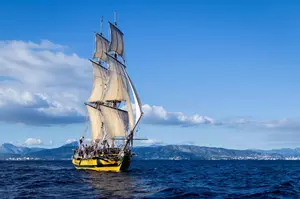 La Grace, a replica of a 17th-century corsair brig, has been sailing the seas since 2010. It honors both Czech maritime history and the incredible story of the only Czech corsair in the Caribbean, Augustin Heřman (c. 1621?-1686). Born in Mšeno, Kokořínsko, he fled with his family after the Battle of White Mountain during his youth. He later studied surveying and geography in the Netherlands. Eventually, he settled in what is now New York City, most likely becoming the first Czech to live in North America. His adventurous spirit drove him to the sea; in 1649, he purchased a swift brig named La Grace and joined corsairs who targeted mainly Spanish ships in the Caribbean. Augustin Heřman also used his vessel for trade, becoming the largest supplier of tobacco and furs to Europe. In 1670, he created the very first map of Maryland and Virginia, and on his estate in Maryland called Bohemia Manor, he constructed a large house.
4. Czech journeys around the world
 Fernão de Magalhães, who was born around 1480 in the town of Sabrosa in northeastern Portugal, embarked on a voyage on September 20, 1519, that would make his ship the first to sail around the globe. While he lost his life during this remarkable journey, he inspired countless brave explorers worldwide. The second person to achieve this feat was the Englishman Francis Drake, who made his journey between 1577 and 1580.
Jesuit missionaries Josef Pauer, František Stengel and Ignatius Frisch had different ambitions; they set off in the late 1840s as part of the Order of Jesuits. Their year-and-a-half expedition took them through Genoa, Italy, Cadiz, Spain, Veracruz, and Acapulco, ultimately reaching what is now Mexico, where they boarded a galleon toward the distant Philippines. Though they never returned from their mission, in 1776, when the Spanish king ordered the Jesuits to leave Spain and its provinces, they were forced to abandon the Philippines. After a long return journey on the frigate Santa Rosa around Africa, they arrived back in Prague in 1770, becoming the first individuals from the Czech lands to circumnavigate the globe. This journey covered an extensive distance of over 25,000 kilometers and crossed all meridians. However, the dangerous expedition took a toll: Czech historians from Charles University discovered that Pauer died shortly after returning in July 1771 at the age of just 49. Stengel lived in Český Krumlov and passed away in 1785 at 62 years old.
5. Polar explorer Ota Kříž: the northernmost Czech grave and extraordinary travellers in Antarctica
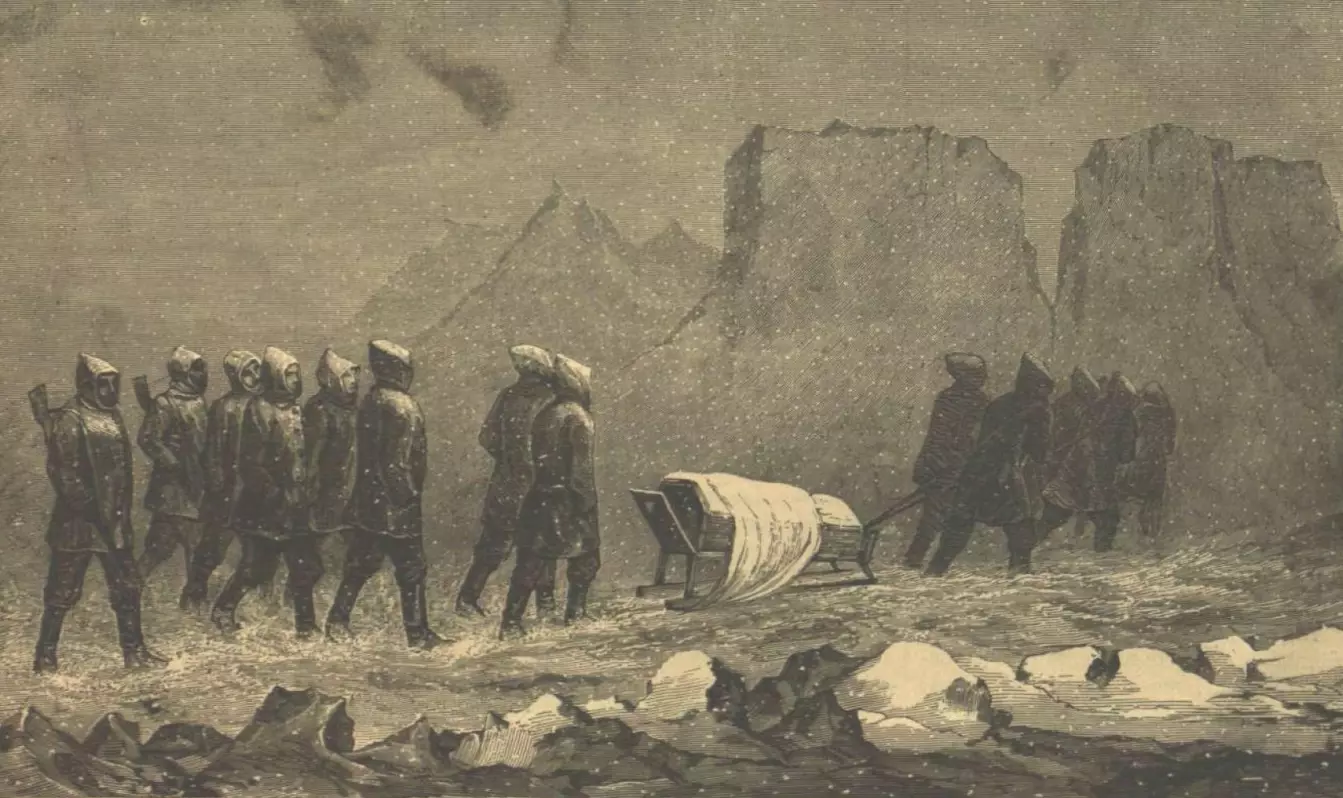 The captivating story of discovery The Land of Franz Josef is tied to the Austro-Hungarian expedition to the North Pole and the quest led by Admiral Tegetthoff. Between 1872 and 1874, these Austrian pioneers successfully discovered an archipelago with 191 islands. The main expedition departed from Vienna on June 13, 1872, taking a train to Bremerhaven, where their ship was docked. Among the crew of 24 men were Lieutenant Gustav Brosch from Chomutov, ensign Eduard Orel from Nový Jičín, and machinist Ota Kříž from Pachlavice in the Kroměříž region. The ship eventually became ensnared in ice, forcing the crew to abandon it in May 1874. Unfortunately, Ota Kříž didn’t survive long enough to see their rescue; he battled tuberculosis even before the expedition began, and his condition worsened. In late 1873, scurvy joined the tuberculosis, leading to his death on March 16, 1874. He was laid to rest in a rock crevice on Wilczek’s Island, making it the northernmost Czech grave. Additionally, the expedition documented the discovery of the archipelago in a bottle, found later in 1991.
Extraordinary travellers: the dog from Tloskov
During the polar explorers’ adventure, a ceramic dog from Tloskov in the Benešov region joined them on their trip to Antarctica. These ceramic dogs are crafted by clients at the Tloskov Social Services Centre, and there are now hundreds of them traveling globally. As shown on social media, these dogs have made it to far-off places like Oceania, the Solomon Islands, Canada, Kashmir in India, Sri Lanka, Slovakia, Ukraine, Belgium, and many other locations worldwide. The latest territory they conquered was Antarctica, where a dog accompanied the Expedition of Masaryk University as part of the Czech Antarctic Research Programme to Nelson Island. These figurines are not only taken by Czech explorers; well-known bands like Divokej Bill, Trautenberk, and Mňága a Žďorp also carry them. You can purchase your own ceramic dog through the social shop and then snap a photo with your new companion to share on social networks.
6. Travelling with Karel Čapek
 If you’re a fan of the author Karel Čapek and his essays, you should definitely read his travelogues including Italian Letters, English Letters, A Trip to Spain, Pictures from Holland, and The Road to the North. Çapek traveled through various countries as a keen observer of nature and local customs. His motivations for traveling were diverse: for instance, he went to Great Britain to partake in a meeting of the newly established PEN writers’ club, whereas his visit to Scandinavia was a personal journey he took in 1936 with his wife Olga Scheinpflug and her brother Karl. They set off by train through Germany to Denmark, continuing to Copenhagen, Stockholm, Uppsala, and Oslo before reaching Bergen. From there, they boarded a steamer to sail along the Norwegian coast to Cape Nordkapp.
7. Vandals on the island of man-eaters
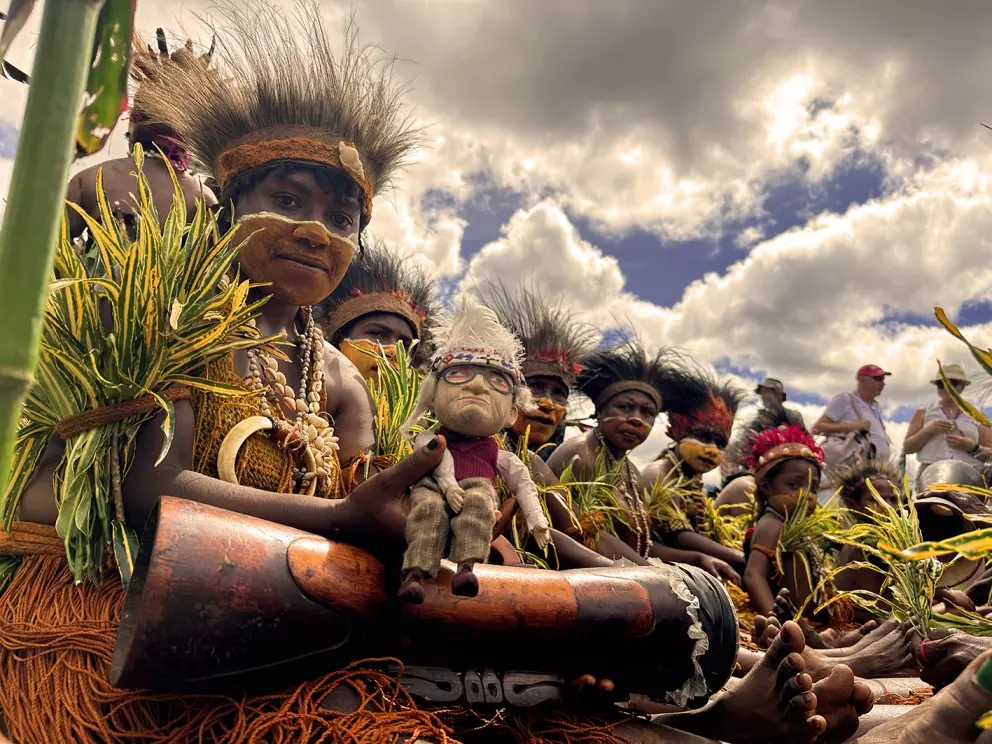 Inspired by ancient explorers, more Czechs are now embarking on their own adventures. For example, on a round-the-world trip in 1936, Břetislav Jan Procházka and Jindřich Kubias traveled by car. From 1972 to 1975, Richard Konkolski became the first Czech to sail around the world aboard his yacht Nike I. The first Czech to complete a circumnavigation by bicycle was Vítězslav Dostál from 1994 to 1997, with a similar achievement by Michal Jon and Lucie Kovaříková from 2002 to 2005. In 2013-2014, Pavel Suchý traveled the globe on a Jawa 350 motorcycle, and in 2018, Roman Kramařík became the first Czech to circle the world solo in a Cessna aircraft.
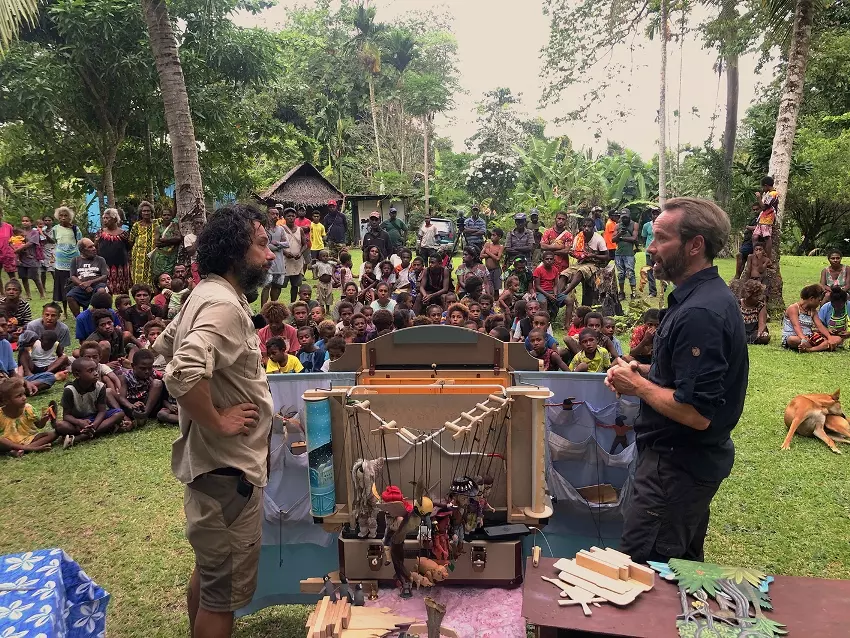 More adventurers are inspired by Čapek’s travelogues. In 2021, Expedition Z101 traveled to Africa, retracing the journey of Hanzelka and Zikmund to see how the continent has evolved in 74 years. Celebrated journalist, filmmaker, and explorer Dan Przybaň (*1976) is known for his amusing travels across the globe in yellow Trabants. Renowned Czech traveller Miloslav Stingl continues to inspire many with his adventures. His influence even led to a daring expedition into the wilds of Papua New Guinea involving three friends, bikers, and filmmakers: Pavel Liška, Jan Révai, and Hynek Bernard. Now, you can accompany these three adventurers in the thrilling documentary Vandals on the island of the man-eaters.
Other famous Czech travellers you can find
 Czech travel takes many forms—from bold expeditions into the unknown to scientific missions and journeys sharing people and their stories. On Kudy z nudy, you can learn about various remarkable travellers through Czech NEJ medallions and in the Czechia between the lines series of travelogues and books by celebrated Czech adventurers. Each had their own unique way of experiencing the world, leaving their own lasting impact.
-
- Valérie Svobodová was the first Czech to fully explore the entire world.
-
- Photographer and astronomy advocate Petr Horálek offers a unique perspective on the universe.
-
- Adventurer and photographer Jiří Kolbaba has been narrating tales of far-off places with ease and enthusiasm for many years.
-
- Writer and ethnographer Miloslav Stingl devoted his life to exploring cultures, myths, and indigenous peoples.
-
- The legendary duo Miroslav Zikmund and Jiří Hanzelka documented their travels across continents and wrote the history of Czech exploration.
-
- Reaching the North Pole? A lifelong aspiration for many; František Běhounek was the first Czech to stand there.
-
- Barbora Markéta Eliášová ventured into the world solo, without certainties and maps, in the late 19th and early 20th centuries.
-
- Martha Schicht pioneered women’s travel at a time when it was undeniably difficult for women.
-
- The most renowned Czech explorer Emil Holub managed to map Africa, often risking everything to do so.
-
- Václav Vojtěch, a traveller and polar explorer, was the first Czech to step foot on the icy continent.
-
- Supporter Vojta Náprstek aided explorers, collectors, and scientists while staying out of the limelight himself.
-
- The naturalist Tadeáš Haenke discovered new plant species and contributed greatly to botanical history.
-
- Plant collector Benedikt Roezl made Czech lands famous with his extensive searches for orchids in jungles around the globe.


