
January in Czech History: Significant Days and Anniversaries

January is the first month of the year and it brings a number of interesting holidays and important days. On New Year’s Day, the very first day of January, we wish each other good luck for the year ahead. Soon after comes the feast of the Three Kings and the start of the Shrovetide season. Below is a summary of notable anniversaries and trivia from January in Czech history.
1 January 1900 – the crown was used for payment in the Czech lands for the first time
The Czech crown was first used as the currency of the Czech lands on 1 January 1900. The exchange rate between the koruna and the previous currency, the gulden, was set at 2:1.
1 January 1993 – establishment of the independent Czech Republic
Czechoslovakia, the shared state of Czechs and Slovaks, existed for 74 years, two months and three days. On 1 January 1993, the Czech Republic and the Slovak Republic came into being as its independent successor states. The event is commemorated by a national holiday, the Day of the Restoration of the Independent Czech State.
2 January 1965 – Večerníček was broadcast for the first time
On 2 January 1965, the much-loved bedtime programme Večerníček was broadcast on television for the first time. Its opening sequence is the oldest Czech television title sequence and one of the oldest in Europe. The little character in a paper hat was designed by Radek Pilař, the artist behind the cartoon Rumcajs and his family. The series with the most episodes are Pat and Mat (130 episodes) and Bob and Bobek (91 episodes), followed by Rumcajs (52 episodes), Spejbl and Hurvínek (46 episodes) and The Little Mole (43 episodes).
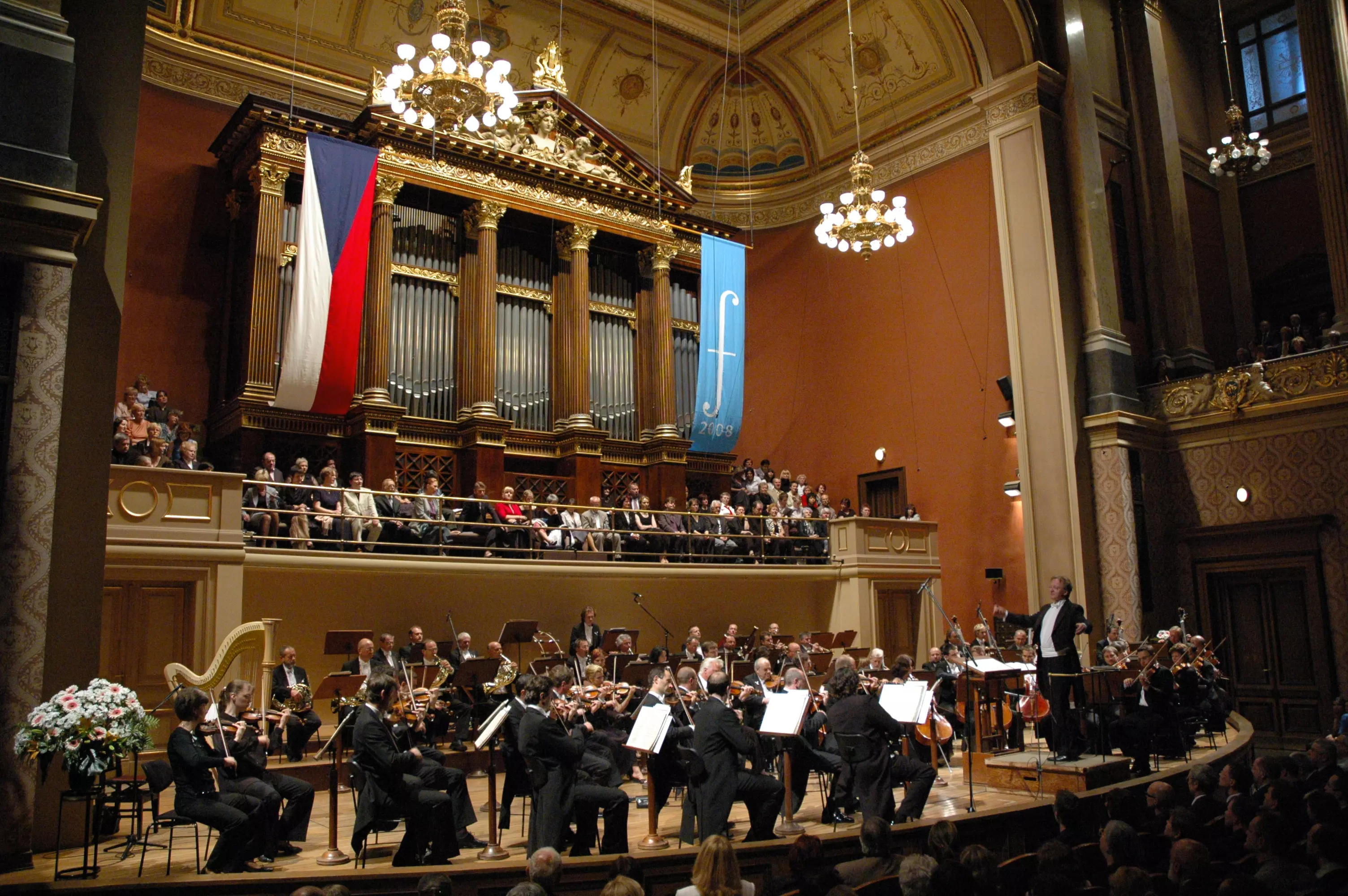
4 January 1896 – the first concert of the Czech Philharmonic
The first ever concert of the Czech Philharmonic took place on Saturday 4 January 1896 at the Rudolfinum in Prague. Antonín Dvořák conducted his own works: the Third Slavonic Rhapsody, the world premiere of Biblical Songs Nos. 1-5, the overture Othello and the Czech premiere of Symphony No. 9 From the New World, which had received its world premiere in December 1893 at Carnegie Hall in New York.
6 January – feast of the Three Kings
The feast of the Three Kings, also known as Epiphany, is celebrated every year on 6 January. The day marks the end of the Christmas season, when most households take down their Christmas trees, and every year the Three Kings’ charity collection (Tříkrálová sbírka) takes place across the Czech Republic. Three Kings’ Day also marks the beginning of more than eight weeks of Shrovetide (masopust), a season of pig slaughters and feasting that ends on Ash Wednesday.
12 January 1782 – Joseph II abolished a third of the monasteries
By decree of Emperor Joseph II, all monasteries in the Austrian Empire that did not serve the public good, teach, carry out scientific work or care for the sick were dissolved. In the Czech lands, this affected more than a third of all monasteries.
14 January 993 – foundation of Břevnov Monastery
The Benedictine Břevnov Monastery in Prague, the oldest monastery for men in the Czech Republic, was founded in 993 by Prince Boleslaus II of the Přemyslid dynasty and the Bishop of Prague, St Adalbert (Vojtěch). During the celebrations of its 1000th anniversary in 1993, Pope John Paul II raised Břevnov Abbey to the status of an archabbey. The monastery is also considered the oldest documented brewing site in the Czech Republic, and the Břevnov Monastery Brewery continues the tradition today.
16 January 1969 – Jan Palach set himself on fire in Prague
In protest against the suppression of freedoms after the invasion of Czechoslovakia by the Warsaw Pact armies, a student set himself on fire in Wenceslas Square in Prague. The student was Jan Palach from the Faculty of Arts of Charles University. He died of his severe burns three days later. His funeral on 25 January 1969 turned into a mass demonstration for freedom and democracy, which the politicians ignored.
20 January 1787 – W. A. Mozart in Prague for the first time
The composer Wolfgang Amadeus Mozart visited Prague for the first time and conducted his opera The Marriage of Figaro at the Estates Theatre.

21 January 1930 – the first traffic light began to work in Prague
The first traffic light in Prague was switched on at the junction of Wenceslas Square with Jindřišská and Vodičkova streets on 21 January 1930.
21 January 1989 – Palach Week, which heralded the Velvet Revolution of 1989, ended
In 1989, events commemorating 20 years since Jan Palach’s self-immolation grew into a series of protests unprecedented since 1969. Hundreds of people gathered in Wenceslas Square from 15 to 21 January 1989, despite an official ban, but the protests were repeatedly and brutally broken up with batons, tear gas and water cannons. This series of protests, known as Palach Week, set in motion the events that culminated in the Velvet Revolution in November of the same year.
24 January 1939 – start of construction of the Czech motorway network
At seven in the morning on 24 January 1939, the civil engineer Karel Chmel (1908-1983) drove an axe into the first tree of a future forest cutting in the Chřiby hills, marking the start of construction of the Czechoslovak motorway network. Chmel is also probably the author of the Czech word for motorway, dálnice.
27 January 1945 – liberation of the Auschwitz concentration camp
On 27 January 1945, the Auschwitz concentration camp was liberated by the Soviet Red Army. We remember this date and the suffering of the six million murdered European Jews and other victims of Nazism as the International Day of Remembrance of the Victims of the Holocaust and the Prevention of Crimes against Humanity.
28 January 1919 – foundation of Masaryk University in Brno
The second university in the Czech lands, Masaryk University, was founded in January 1919 thanks to Tomáš Garrigue Masaryk, who was then the first president of independent Czechoslovakia. On the anniversary of its foundation, 28 January 1925, Masaryk University awarded its first honorary doctorate, doctor honoris causa, to the composer Leoš Janáček.
31 January 1928 – Erich M. Remarque’s novel All Quiet on the Western Front was first published
The famous novel Im Westen nichts Neues, known in English as All Quiet on the Western Front, is one of the best-known anti-war novels of all time. The book by Erich M. Remarque, which has autobiographical elements, was first published on 31 January 1928. It captured the feelings of thousands of young men from all over Europe who left their youth and all their illusions behind on the battlefields of the First World War. One of the best-selling books of all time, it is still widely read today, and the war drama based on it was also filmed in the Czech Republic.


