
7 fascinating facts about Japan that will surprise you

In Japan, you will find several fascinating connections to the Czech Republic. One notable link is left by architect and builder Jan Letzel (1880–1925), who worked in Japan for many years designing both private and public buildings. His Industrial Palace in Hiroshima remarkably survived the atomic bomb blast. The ruins, preserved as they were in 1945, transformed into the world’s most famous peace memorial, warning against nuclear weapons.
The relationship between the Czech Republic and Japan started with Tomáš Garrigue Masaryk, who visited Japan in 1918, before official diplomatic ties were established. The bond between the two countries was strengthened by President Václav Havel’s trip to Japan in 1995 and the visit of the Japanese Emperor and Empress to the Czech Republic in 2002. Many Czechs have received Japanese honors, including athlete and Olympic champion Věra Čáslavská, nuclear engineer Dana Drábová, pilot of the long-distance flight from Prague to Tokyo in 1927 Jaroslav Skála, along with his mechanic Matěj Taufer, sinologist Věnceslava Hrdličková, and orientalist Zdenka Švarcová, photographer and publicist, member of the Sakura Expedition at EXPO 1970 Zdeněk Thoma, and Japanologists Vlasta Winkelhöferová and Vlasta Čiháková-Noshiro, along with CzechInvest founder Josef Lébl, politician Jan Kavan, and Japanologist Jan Sýkora. Today, Japan is the second largest foreign investor in the Czech Republic, with nearly three hundred Japanese companies operating here.

Every fan of Japan is sure to know the Náprstek Museum of Asian, African, and American Cultures in Prague. It is unique in our country as it showcases both the material and spiritual heritage of non-European civilizations and emphasizes the crucial and irreplaceable role of non-European nations in world history. However, there are many more places connecting us to Japan. Come explore them with Kudy z nudy!
1. Alfons Mucha and Manga Comics
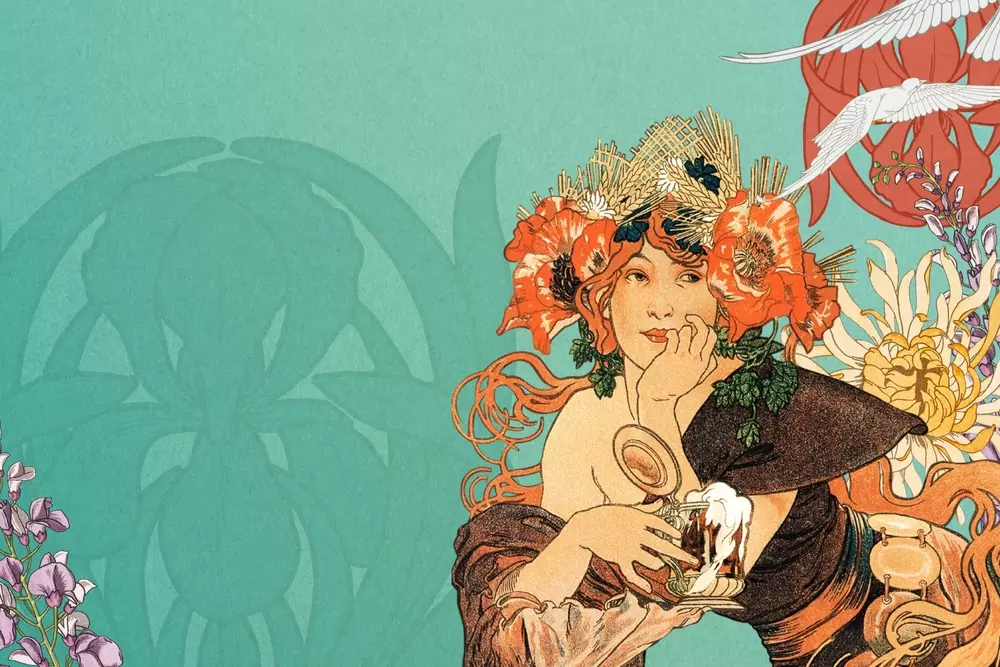 When thinking of Japan, you might picture manga comics or anime and the colorful animated characters they feature. Rarely known is that Czech Art Nouveau painter Alfons Mucha left a mark on traditional Japanese art. He drew inspiration from floral patterns of traditional Japanese art for his posters and paintings, skillfully blending them with European Art Nouveau styles. Similarly, Mucha has influenced several generations of manga creators. They rediscovered his work in the 1970s, with early adopters among creators of the psychedelic visual style for music bands in the 60s and 70s. Mucha’s charm is evident in the lovely faces, intricate floral ornaments, large eyes, and detailed hairstyles of female comic heroes. Japanese people adore Mucha just as much as we do!
2. Japanese Collections
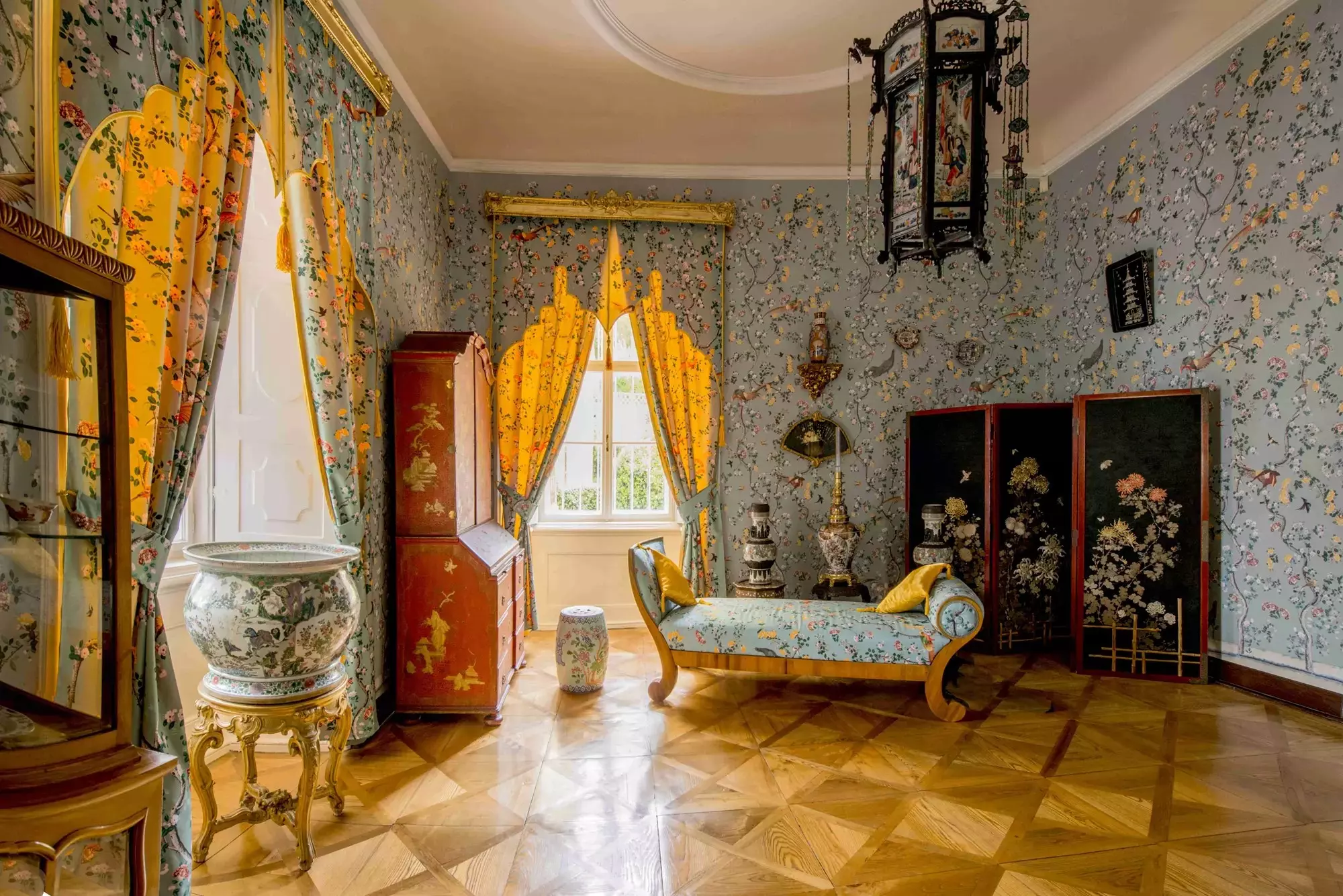 When visiting many Czech castles and chateaus, you will discover intriguing curiosities collected by noble families during their travels in exotic lands. Passionate travelers and collectors included the Lichnovští, who purchased the Hradec nad Moravicí chateau in the late 18th century. Among the rare items they brought back from the Orient are a Japanese execution sword and a Mandarin outfit. At Kynžvart Castle, you can find Japanese samurai attire, while several estates host exhibitions of blooming camellias, and you’ll find interesting artifacts at Lysice Castle too. In the 19th century, Count Ervín Dubský of Třebomyslice made a journey around the world and was likely the first Czech to closely encounter Japan. Near the end of the samurai era, he even had personal interactions with famous warriors, being a warrior and aristocrat himself. He returned with rich collections of porcelain, weaponry, including samurai swords, metal containers, and figurines, documenting his travels through extensive photography albums. If you want a brief experience of Japan, visiting Lysice is a must!
3. The Story of Japanese Countess Mitsuko
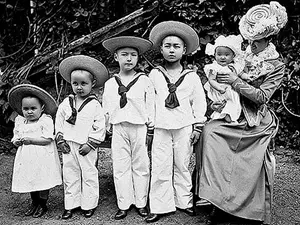 One of the first Japanese women to leave her native country and settle permanently in Europe was Mitsuko Aoyama (1874–1941), the daughter of an antique dealer in Tokyo. In 1895, she married Count Heinrich Coudenhove-Kalergi (1859–1906), who served as the Austro-Hungarian consul in Japan. The count ended his political career to dedicate himself to philosophy until his untimely death in 1906. Starting in 1896, they lived with their growing family at the chateau in Poběžovice. Together with their children, they frequently visited the nearby Horšovský Týn chateau, which at that time belonged to the family of Counts Trauttmansdorff. The exotic Japanese countess is still remembered today, not only through personal belongings and photographs but also through the Japanese garden in Poběžovice. This garden, created by a team of Japanese architects and artists, symbolizes the family with various stones, while a stone lantern represents eternal light.
4. Japanese Gardens
 Japan is not only one of the most amazing countries in the world but also home to stunning Japanese gardens. You don’t have to travel hundreds of miles as there are Japanese gardens right here in the Czech Republic. You can take a quick glimpse into distant Japan at the Japanese garden in Sněžné or the Aizen garden in Říčany. Fascinating Japanese gardens can also be found in several zoological and botanical gardens, such as the Plzeň Zoo, the Botanical Garden of Prague in Troja, or the Zlín Zoo, which features the Mu-Shin Japanese garden.
5. Czech Fuji
 The so-called Czech Fuji, also known as Růžovský Hill (619 meters), is a prominent peak in the Czech Switzerland region. It got its nickname for good reason: both mountains share a volcanic origin, ancient names, solitary dominant positions in national parks, where visitors are allowed only on marked trails, and breathtaking photographs capturing their summits emerging from mist and clouds. Of course, public interest in the Japanese Fuji is much greater; it’s estimated that approximately a quarter of a million hikers climb to its summit each year.
6. World Expos of 1970 and 2025
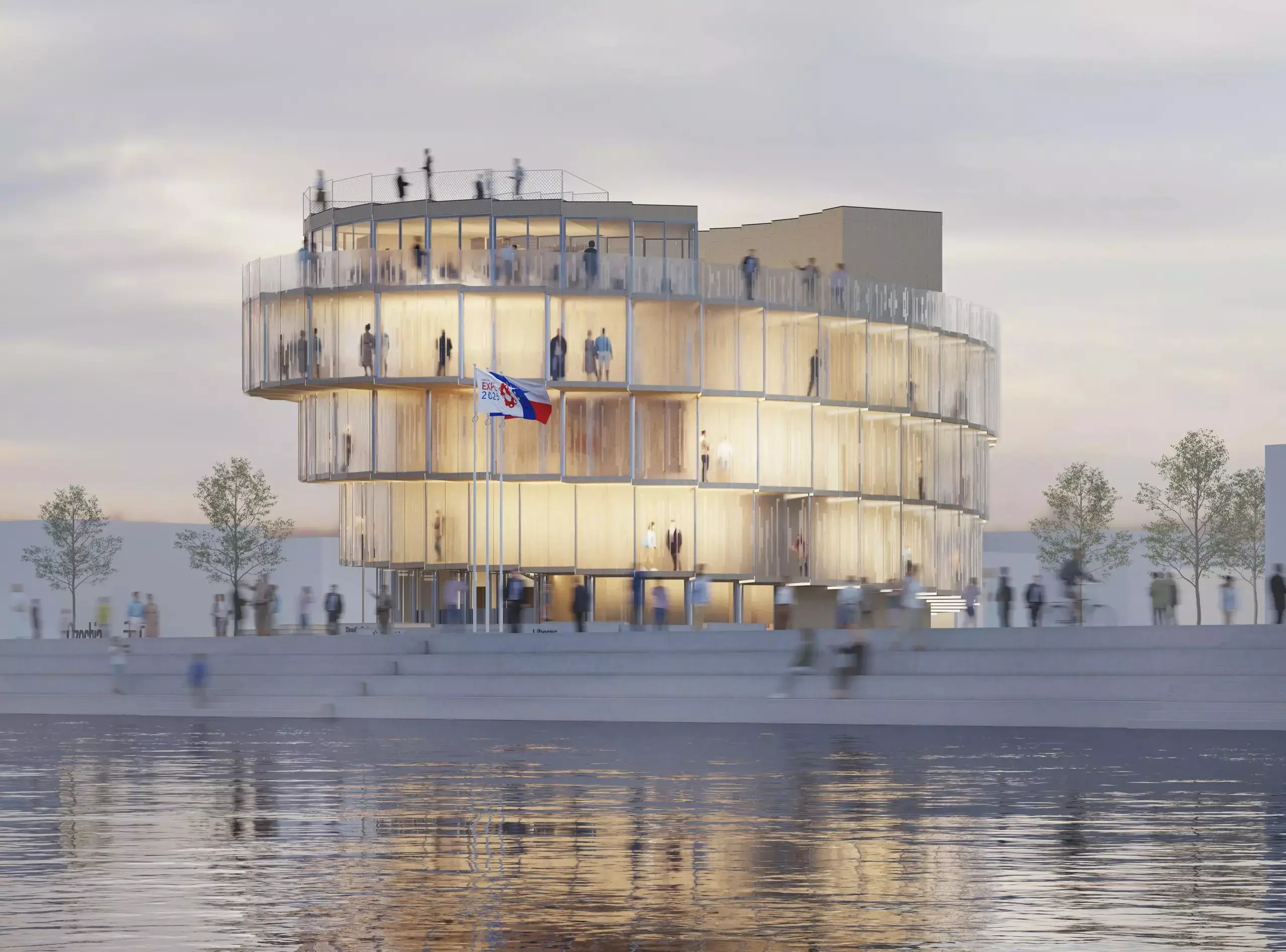 The prestigious World Expo took place in Osaka, Japan, in 1970. The Czech Pavilion, designed by architect Viktor Rudiš, attracted about eleven million visitors. The exhibition was based on the work of poets Jan Skácel and Jiří Kolář, featuring a glass River of Life by Jaroslava Brychtová and Stanislav Libenský. This was their biggest and most remarkable creation: a twenty-two-meter-long two-layer molten relief that bore the impressions of two girls seemingly being carried away by the water’s surface.
After fifty-five years, the World Expo returned to Japan. Expo 2025 was again held in Osaka, this time on the man-made island of Yumeshima. The main themes revolved around sustainable development, healthier lifestyles, and prolonging human life. The exhibition lasted six months, drawing over 25 million visitors, surpassing attendance records of Expo 2005 in Aichi Prefecture. The event was visited twice by Emperor Naruhito and Empress Masako.
The World Expo featured hundreds of national pavilions, interactive exhibits, cultural programs, technological innovations, and cuisine from around the globe. Themed zones focused on water, eco-innovations, and nature conservation, along with evening multimedia and light shows that captured significant attention.
The Czech Republic participated in this World Expo for the sixth time as an independent nation, achieving great success. More than one and a half million visitors explored the Czech Pavilion designed by Apropos Architects, with an average of 12 to 14 thousand people attending daily. The display combined traditional values, such as Czech glass and music, with innovations, nanotechnology, and contemporary design. The pavilion also received an award from the European Union for hospitality and the Europa award for the best European mascot.
One of the most unique features of the Czech exhibit was the Forest of Civilizations, made from 133 stumps of subfossil oaks, around 6500 years old. The wood originated from the watershed of the Olše River, and each stump bore the name of a national pavilion, symbolically connecting the world. Under the supervision of glass artists Rony Plesl and Jiří Šín, the exhibit also showcased original glass sculptures created using the unique Vitrum Vivum technology, and an unfinished triptych by Alfons Mucha titled Three Ages. The Czech National Day took place on July 24, 2025, coinciding with the 165th anniversary of Mucha’s birth.
7. Ikigai: The Japanese Reason to Get Out of Bed Each Morning
 One Japanese term that has gained global recognition in recent years is ikigai – a word often translated as the meaning of life or the reason to get out of bed in the morning. In the Japanese perspective, it’s not about having a single grand life goal but achieving a balance between what brings a person joy, what they are good at, what is meaningful to others, and what they can be recognized for.
The concept of ikigai emerges where joy in activity, personal abilities, societal contribution, and earning a livelihood naturally intersect. It doesn’t have to be tied to a profession or extraordinary talent. For many Japanese, ikigai represents delightful daily activities – the satisfaction of a job well done, caring for loved ones, small rituals, or the peaceful rhythm of the day.
Moreover, ikigai is not the only Japanese word that has become familiar outside of Japan. Thanks to this country, we now commonly recognize terms such as bonsai, the art of tree miniature cultivation, ikebana, flower arranging, sakura, the symbol of cherry blossoms and transient beauty, and origami, the traditional art of paper folding. All these terms embody a similar philosophy – the emphasis on simplicity, patience, and the ability to find meaning in small things.
Perhaps this is why Japanese concepts resonate with us so much. They remind us that often, we don’t need more for happiness, but rather, less – and that everyone can have their own ikigai. It might not even require us to call it by its Japanese name, yet its essence remains the same: finding balance between work and leisure, finding joy in ordinary things, and cherishing moments of peace. Whether it’s a walk in the forest, a weekend at a cottage, or gathering with friends, all these experiences can be our very own personal Czech ikigai.


