
Explore Hrzánský Palace this Saturday with the Czech Republic’s Government Office

 On the first Saturday of September, specifically on September 5, 2026, the Office of the Government of the Czech Republic will open the doors of the illustrious Hrzánský Palace, located on Loretánská Street, to the public. This historic building, currently designated for ceremonial functions, will be accessible for guided tours. Each tour, led by an experienced guide, will last roughly 40 minutes, with the first tour commencing at 10:00 and the final one at 17:00. This event provides a unique opportunity for both residents of Prague and visitors to explore this significant landmark and delve into its rich history and present-day uses.During the tour, participants will have the chance to visit various noteworthy areas of the palace, including the Strahov Lounge, the Prime Minister’s study, the Tapestry Hall, and the elegant dining room and terrace, which boasts stunning views over the heart of Prague. One of its most notable former residents, Tomáš Garrigue Masaryk, enjoyed this scenic outlook during his stay from 1894 to 1896.
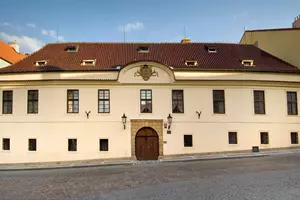 Hrzánský Palace is steeped in history, originally constructed as a Gothic dwelling. In the 14th century, it was owned by the St Vitus Chapter and later by Henslin, an imperial doorkeeper. Over the centuries, it has undergone numerous transformations in ownership, appearance, and purpose. The Kolowrat family acquired the property in the 1650s and undertook a significant reconstruction, turning it into a four-winged early Baroque palace, which has since seen only minor modifications. Following the Kolowrats and the Hrzáns of Harrasov, ownership passed to the Chapter of St Vitus, and then to local townsfolk. In more contemporary history, the palace served as a painting school founded by Ferdinand Engelmüller, a student of the notable artist Julius Mařák, as well as housing the studio of painter Jan Slavíček. Since 1949, it has been utilized for various government functions and continues to serve as a temporary seat for governmental activities and meetings of advisory bodies.


